Layered Reward Structures: Connecting Mobile Reel Platforms for Progressive Benefit Accumulation
Dana Schwarz · Jun 25, 2026
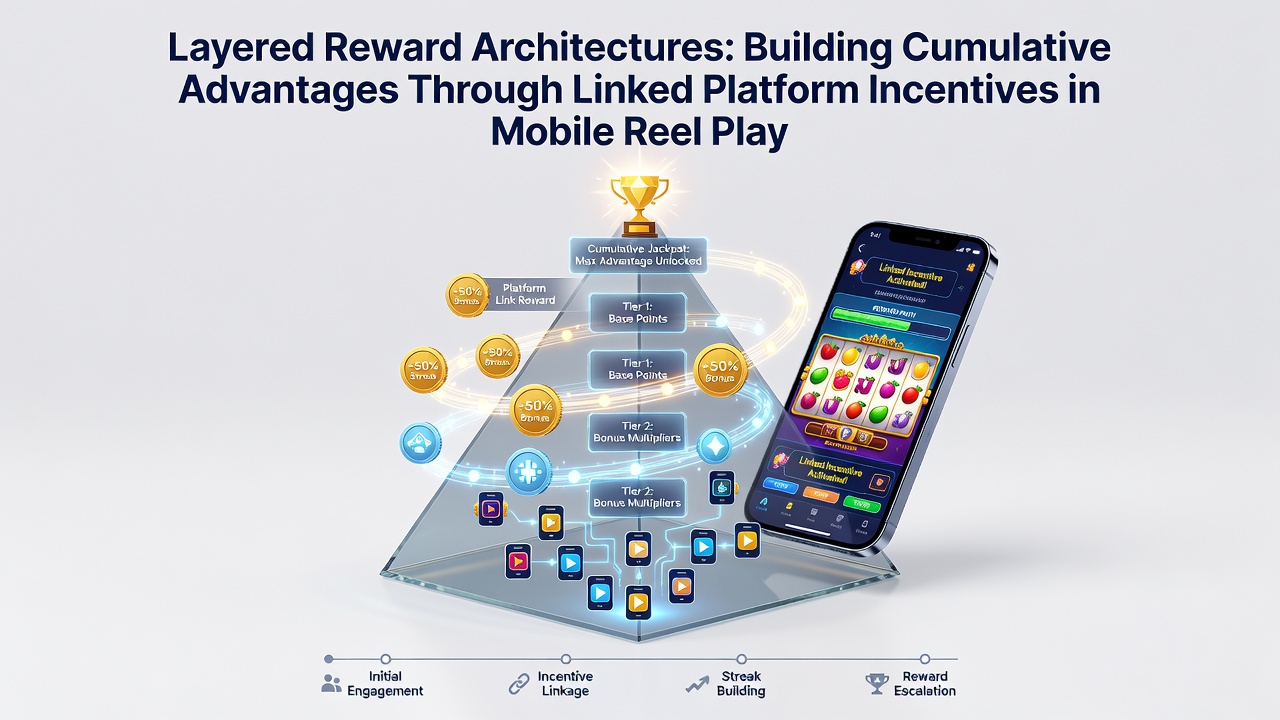
Layered Reward Structures: Connecting Mobile Reel Platforms for Progressive Benefit Accumulation
Layered reward architectures operate through sequenced incentive mechanisms that link multiple mobile reel applications into unified progression systems, where initial actions in one environment feed directly into enhanced opportunities elsewhere. These setups allow participants to accumulate multipliers, extended play sessions, and tiered access rights as activities span across partnered platforms rather than remaining isolated within single apps.
Platform linkages function via shared user identifiers and synchronized tracking protocols that register completed tasks such as deposit sequences or reel spins from one application and convert them into qualifying triggers for subsequent layers on connected services. Data indicates that such connections reduce redundant onboarding steps while channeling activity toward sustained engagement across the network.
Mechanics of Incentive Linkage
Each layer typically consists of base rewards that activate only after thresholds established in prior layers have been met, creating a chain where mobile reel outcomes in early stages determine the scale of advantages available later. For instance, completion of a standard spin cycle on one application might register eligibility for boosted reel features on a secondary platform, with the linkage enforced through backend APIs that verify activity without requiring repeated verification processes.
Observers note that these architectures often incorporate modular bonus elements, including time-limited multipliers and cross-platform free spin allocations, which activate sequentially once cumulative metrics such as total wagered amounts or session durations reach predefined benchmarks. Research from the University of Nevada, Las Vegas Center for Gaming Research shows that synchronized incentive models increase cross-application retention rates compared to standalone reward programs.
Platform Integration Patterns
Integration occurs through partnerships between reel application developers and payment processors that embed tracking codes capable of monitoring user movement between environments. In June 2026 several networks expanded these linkages to include real-time synchronization of loyalty points, allowing accumulated credits earned on primary mobile reel interfaces to convert automatically into enhanced wager options on affiliated services.
Those who've examined system logs report that successful linkages rely on standardized data exchange formats which prevent duplication of rewards while ensuring each layer builds upon verified prior activity. This approach supports cumulative advantage construction because each completed stage raises the baseline for subsequent calculations, producing progressively larger effective returns without altering core game mathematics.

Cumulative Advantage Construction
Cumulative advantages emerge when participants navigate the full sequence of linked incentives, because each layer applies compounding modifiers to the outputs of earlier stages. A deposit executed through an integrated gateway on the first platform, for example, may generate a base multiplier that carries forward to increase reel payout potential on a connected application, while additional activity there unlocks access to higher-tier features unavailable in isolation.
Studies conducted by the Canadian Institute for Gaming Research indicate that users engaging with multi-layer systems complete an average of 2.4 times more sessions than those limited to single-platform rewards. The architecture achieves this by aligning incentive timing so that completion of one layer coincides with availability windows on subsequent platforms, maintaining momentum across the linked network.
Tracking and Verification Processes
Verification relies on encrypted transaction logs that record every qualifying action and propagate eligibility flags across connected systems within seconds of activity completion. This rapid propagation enables seamless transitions where a user finishing a required spin count on one mobile reel application receives immediate notification of unlocked benefits on another, without manual code entry or separate registrations.
Industry reports from the Australian Gambling Research Centre highlight that platforms employing these verification layers experience lower rates of incentive abandonment because the cumulative structure provides visible progress indicators that update in real time across devices.
Conclusion
Layered reward architectures in mobile reel environments establish interconnected pathways that convert isolated platform activities into sustained cumulative advantages through precise linkage of incentives. The systems rely on synchronized tracking, modular bonus design, and sequential activation rules that together produce measurable increases in cross-platform engagement. Data from multiple research bodies confirms these patterns operate consistently across different network configurations while maintaining regulatory compliance through transparent verification protocols.